From Sacred Sanctuary to Animal Enclosure.
Introduction
In recent times, coordinated attacks targeting the heritage of Lalibela have been steadily intensifying. A few months ago, a misleading AI-generated YouTube video titled “A Tomb Discovered in Ethiopia That Changed Christian History” circulated widely. Lacking any credible scientific evidence, the video attempted to detach Lalibela from its authentic historical roots by linking its architectural achievements to external forces. This narrative appeared to be part of a broader, systematic effort to appropriate history and erase Ethiopia’s civilizational legacy.
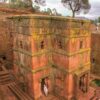
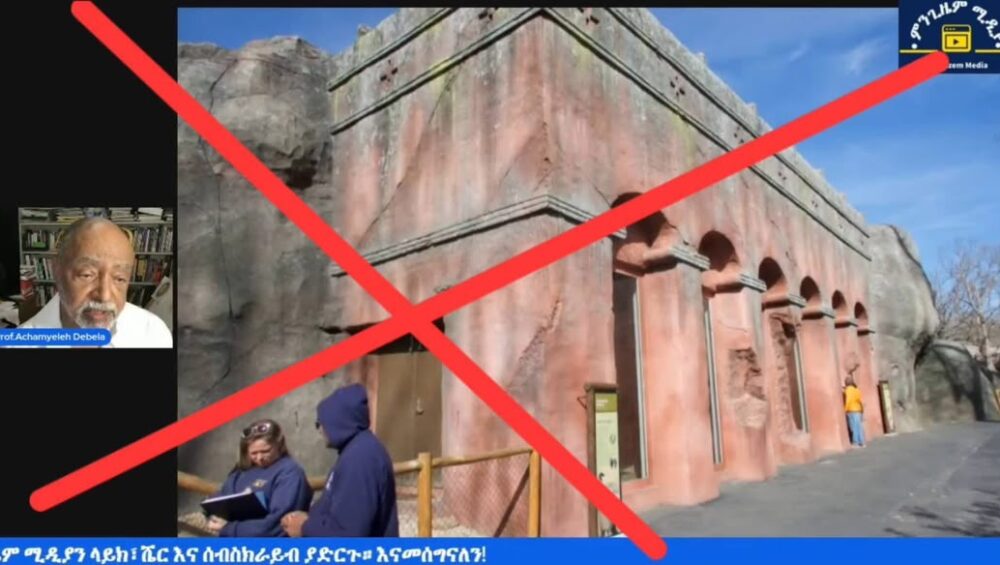
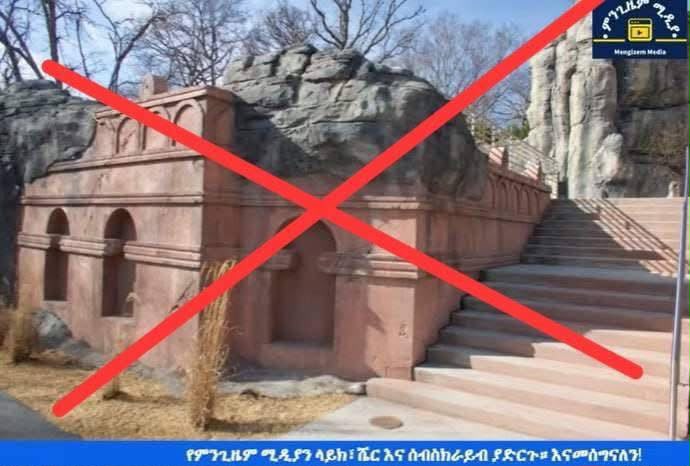
Now, a new and troubling development has emerged. In the state of North Carolina in North America, a structure modeled after the rock-hewn churches of Lalibela has reportedly been constructed within a zoo and repurposed as an animal enclosure—specifically for primates. This act reduces a sacred and historically monumental site into a setting for animals, undermining its profound spiritual significance and immense cultural value.
It is therefore essential that Ethiopians recognize the gravity of this issue and respond in an organized and appropriate manner by voicing their concerns to the responsible institutions. In this regard, I would like to acknowledge media outlets and organizations that have brought attention to this matter and helped amplify public awareness.
⸻
The Significance of the Lalibela Churches
The rock-hewn churches of Lalibela are not ordinary structures. Often referred to as the “New Jerusalem,” they stand as enduring symbols of African ingenuity and spiritual depth. Carved entirely out of solid rock, these monuments are not merely architectural feats but embodiments of deep faith and pivotal landmarks in global Christian history.
Their construction in the 12th century demonstrates that Ethiopians of that era possessed advanced knowledge of geometry, mathematics, and engineering. Moreover, such monumental works imply the existence of a stable political system and a strong economic foundation during the reign of King Lalibela.
Spiritually, these churches function as “living gospels”—centers of continuous worship for over eight centuries. They represent resilience and devotion within the Ethiopian Orthodox Tewahedo Church. As one of the few sacred sites of such magnitude built in pre-colonial Africa, Lalibela stands as a powerful testament to Africa’s independent spiritual identity and advanced civilization.
Furthermore, when pilgrimages to Jerusalem became difficult due to conflict, King Lalibela established a symbolic Jerusalem within Ethiopia. This act provided a spiritual alternative for Christians and contributed significantly to global religious heritage. Today, Lalibela remains a living archive of ancient liturgy, music, and religious traditions, preserved without interruption.
Recognized as a UNESCO World Heritage Site, Lalibela is not only Ethiopia’s treasure but a shared heritage of humanity. It represents a remarkable fusion of spiritual devotion and architectural brilliance—making it far more than a historical site; it is a core element of identity.
⸻
Lalibela and America: A Historical Perspective
The churches of Lalibela were constructed in the 12th century—more than 550 years before the formation of the United States and over 300 years before Christopher Columbus reached the Americas.
Historians also note that European explorations were partly motivated by the search for the legendary Christian kingdom of Prester John, believed to be located in Ethiopia. This quest contributed indirectly to the discovery of the Americas. In this sense, Ethiopia’s historical prominence played a role in shaping global exploration.
Given this context, it is deeply troubling that a civilization with such historical significance is now represented in a manner that diminishes its value. Transforming a replica of Lalibela into an animal enclosure is not only inappropriate but also raises serious moral and cultural concerns.
⸻
A Misplaced Interpretation
Those responsible for this construction may have viewed it as an artistic or aesthetic project. Given that Lalibela’s churches are carved from rock, they may have mistakenly perceived them as resembling natural caves suitable for animals.
Additionally, institutions in North America often seek visually “exotic” designs to attract visitors. Lalibela’s unique architecture may have been appropriated for commercial appeal. However, this approach reflects a lack of cultural awareness and contextual understanding.
⸻
Implications and Consequences
The use of a Lalibela-inspired structure as an animal enclosure carries significant negative implications. For millions of believers who regard Lalibela as a sacred space akin to a “Second Jerusalem,” this act undermines its sanctity.
It also reinforces harmful stereotypes that associate Africa primarily with wildlife rather than civilization and intellectual achievement. By presenting Lalibela in this context, viewers are more likely to associate it with animals rather than its true historical and spiritual significance.
This misrepresentation risks reducing a masterpiece of human engineering to a mere “cave-like” structure. For those unfamiliar with Ethiopian history, it creates a distorted understanding of Lalibela as a primitive or utilitarian space rather than a sacred architectural achievement.
Moreover, using a community’s sacred symbol for entertainment purposes erodes mutual cultural respect. From an intellectual property perspective, Lalibela’s architectural design represents the creative and historical legacy of a people. Its unauthorized commercial use raises important ethical and legal questions regarding cultural ownership and heritage protection.
⸻
Turning Challenge into Opportunity
Despite its troubling nature, this situation can be transformed into an opportunity to promote Ethiopia’s true historical narrative on a global stage.
If the structure was created out of ignorance, Ethiopian communities—particularly those in North Carolina—can engage constructively with the institution. They can advocate for the structure to be repurposed as a cultural and educational center representing Ethiopian heritage rather than an animal enclosure.
Launching an international media campaign is also crucial. By drawing attention from major outlets such as CNN and BBC, the issue can be reframed to highlight Lalibela’s true significance as an ancient and sophisticated civilization.
Digital diplomacy can further ensure that accurate information about Lalibela is widely accessible online, countering misinformation. Additionally, this moment can be leveraged to promote tourism by encouraging global audiences to visit the authentic site in Ethiopia.
⸻
What Is Expected?
Addressing this issue requires coordinated action at multiple levels:
• Religious institutions should issue formal statements condemning the misuse of Lalibela’s image.
• Ethiopian diaspora communities should engage with local authorities and advocate for change.
• Cultural and heritage organizations should provide accurate historical information globally.
• Diplomatic channels should raise the issue with relevant authorities and international organizations.
⸻
Conclusion
As the saying goes, silence can be dangerous. Ignoring such misrepresentations today may lead to more severe distortions of history in the future.
Allowing sacred heritage to be trivialized sets a precedent that others may follow. Silence enables false narratives to flourish and weakens the defense of cultural identity.
Therefore, it is the responsibility of this generation to respond collectively and decisively. By doing so, we not only protect our heritage but also ensure that future generations inherit an accurate and dignified account of their history.