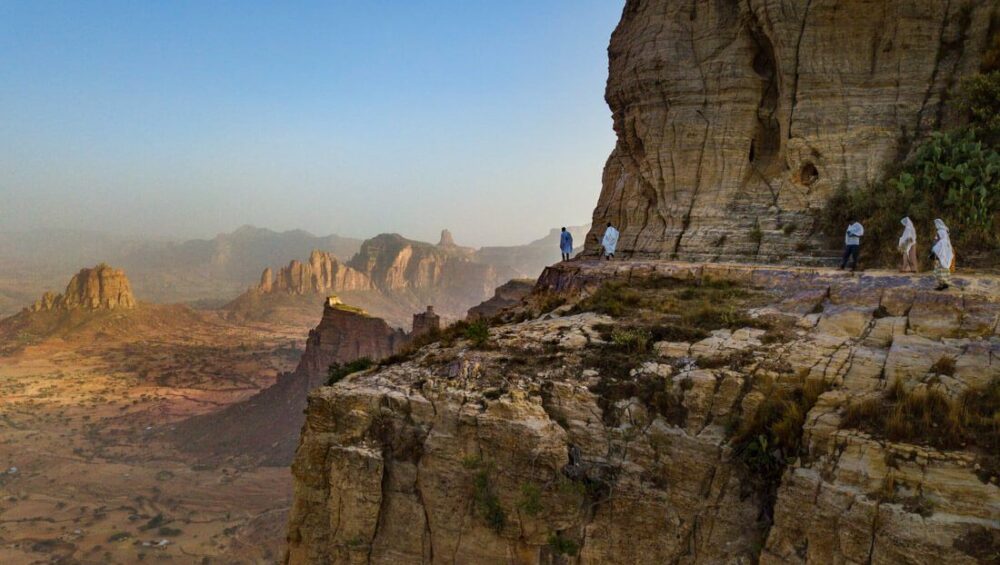
Ethiopia, a land of stunning landscapes and rich cultural heritage, offers a unique trekking experience that goes beyond the typical tourist trails. At Gutena Tours, we invite you to embark on a journey of discovery through our community trekking tourism packages, where you’ll immerse yourself in the vibrant traditions and breathtaking scenery of Ethiopia’s rural communities. Read More“Unforgettable Community Trekking”
I was born and raised in Lalibela, one of Ethiopia’s most sacred and historically significant places. For more than twenty years, I have worked in the tourism and hospitality industry as a guide, tour operator, and cultural tourism professional. I hold a Master’s degree in Cultural Tourism Management from Woldia University and am the owner of Lalibela Lodge.
My relationship with Lalibela is not only professional but deeply personal. I began guiding visitors around the rock-hewn churches in the mid-1990s while still a young boy. Since then, I have witnessed the arrival of generations of foreign researchers, historians, conservation experts, diplomats, filmmakers, and tourists who came to Lalibela seeking history, spirituality, scholarship, and discovery.
Over the decades, I have observed both the benefits and the tensions that foreign involvement has brought to this holy heritage site. While international cooperation can contribute positively to preservation and global recognition, it has also raised serious questions among many local residents regarding ownership of historical narratives, access to sacred knowledge, exclusion of local expertise, and the growing influence of foreign institutions over Ethiopian heritage.
This article is written from lived experience, long-term observation, professional involvement in tourism, and concern for the future of Lalibela. It is not intended as an attack on individuals or genuine conservation efforts. Rather, it is a call for deeper discussion, transparency, accountability, and respect for Ethiopia’s historical and spiritual ownership of Lalibela and its legacy.
The First French Presence I Remember
When I first began guiding tourists in the mid-1990s, there was a French family frequently visiting Lalibela. They usually stayed at Asheten Hotel for long periods, often one month at a time, and returned at least twice a year. Many local people viewed them with suspicion and mystery.
Their guide during one of their early visits was a local man named Chanie, who later passed away under circumstances that fueled rumors and speculation in the community. Stories spread among residents that unusual rituals had taken place in remote mountainous areas around Lalibela, including near Asheten Mariam and Abune Yosef. Whether true or exaggerated, such rumors deeply shaped how many locals perceived these visitors.
The family developed strong relationships with certain debteras — religious scholars associated with ancient Ethiopian liturgical traditions, manuscripts, herbal medicine knowledge, and Ge’ez texts. They were known to seek old manuscripts, healing books, and ancient writings. As a young boy, I did not fully understand their purpose, but I remember feeling both curiosity and fear around them because of the stories circulating in the community.
At the time, I assumed they were simply unusual tourists. Looking back now, I believe they were searching for forms of ancient Ethiopian knowledge and wisdom that went far beyond ordinary tourism.
The Swiss Artist and the Documentation of Lalibela
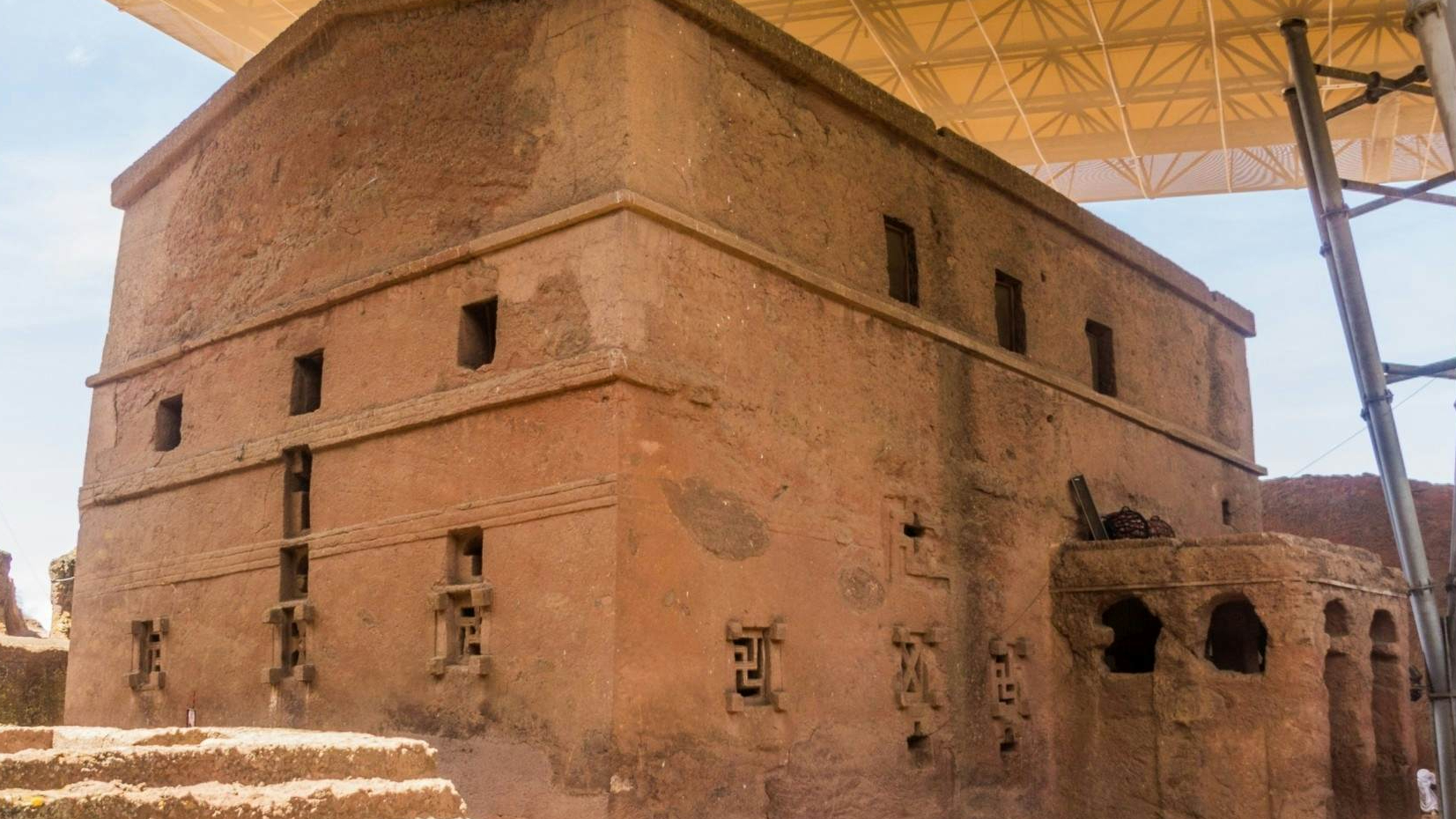
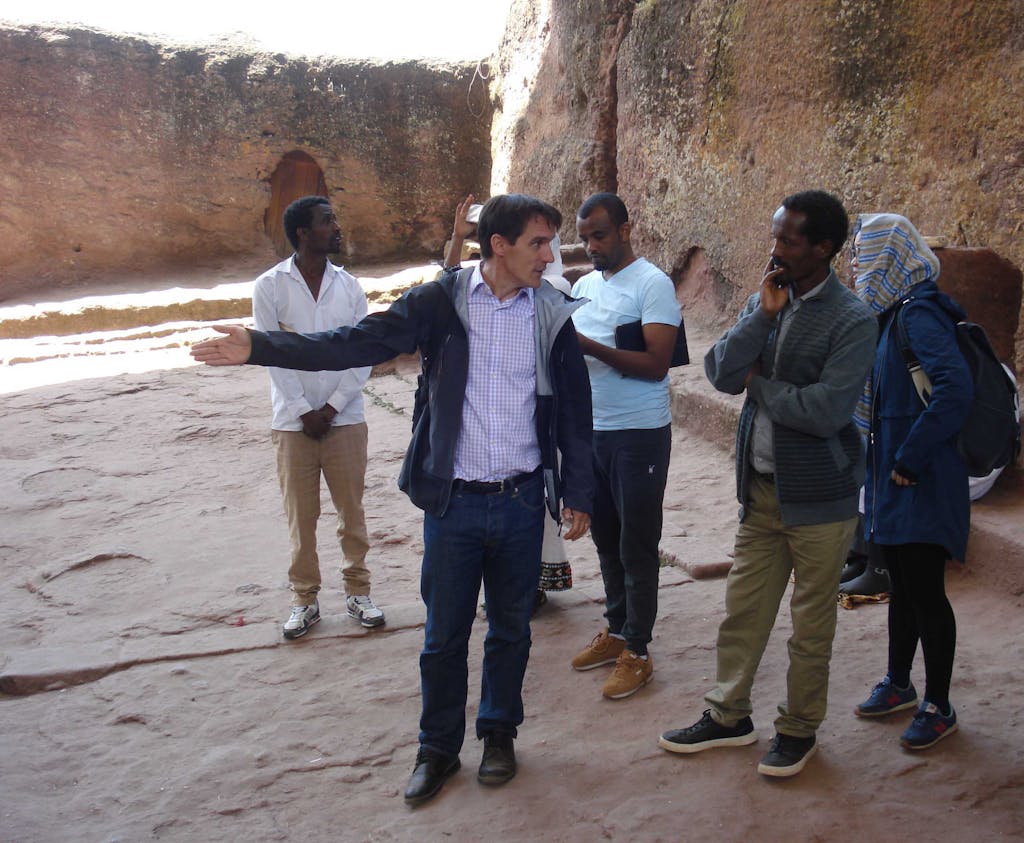
Around 1998, the same French visitors returned with a Swiss artist who spent nearly a month inside the churches of Lalibela. Alongside another guide, Mareg Awoke, I helped guide him through the churches daily. This artist was not only drawing the churches in black and white. He carefully measured dimensions, depths, projections, and architectural details of each structure. He documented the churches with precision and seriousness, studying not only their physical form but also their historical and biblical meanings.
Meanwhile, the French visitors continued traveling through surrounding mountains and monasteries. Their activities remained difficult for local people to understand. In hindsight, it appeared that their interest centered on uncovering spiritual traditions, manuscripts, and ancient knowledge preserved within Ethiopia’s religious heritage.
Jacques Mercier and the Debate Over Lalibela’s Origins
Years later, another French figure entered Lalibela: Jacques Mercier.
Unlike the earlier visitors, his arrival was connected with formal academic and diplomatic institutions, including the French Embassy and cultural organizations. Mercier had significant knowledge of Ethiopian history and was capable of reading Ge’ez and speaking Amharic. His work focused heavily on the churches of Lalibela and their historical origins. However, many local observers strongly disagreed with some of the theories associated with foreign interpretations of Lalibela’s construction. Among residents and church communities, there was growing frustration toward narratives suggesting that the churches could not have been built by Ethiopians themselves. For Ethiopians familiar with the country’s long architectural and spiritual traditions, such theories felt dismissive of indigenous knowledge and historical capability. The rock-hewn church tradition did not begin in Lalibela. Across Tigray, Sekota, and northern Ethiopia there are numerous rock-hewn churches predating Lalibela by centuries. Lalibela represents the height of this architectural tradition, not an isolated miracle disconnected from Ethiopian civilization.
Ethiopia also maintained deep historical connections with Egypt and the broader Christian world during medieval times. Ethiopian Christianity developed unique traditions while remaining connected to early Christian civilizations. To many Ethiopians, the churches of Lalibela are the product of devotion, engineering skill, faith, and a sophisticated religious culture developed over centuries.
Mercier’s book on Lalibela later became influential among researchers and foreign scholars studying the churches. Yet among many local people, concerns remained that some foreign academic interpretations approached Ethiopian history with assumptions shaped by Western perceptions of Africa — particularly the belief that monumental achievements must have originated from outside African civilizations.
The Question of Heritage and Recognition
One issue that continues to create tension is the question of ownership over historical narratives. Who has the authority to interpret Lalibela?
Who benefits from research conducted there?
Who controls access to manuscripts, archives, and sacred knowledge?
And who receives recognition when Ethiopian history is presented to the world?
Many Ethiopians feel that foreign researchers often gain academic prestige, funding, and international recognition from studying Lalibela, while local experts, clergy, and communities remain marginalized from decision-making processes.
There is also concern about how sacred manuscripts are digitally archived and accessed. For centuries, many of these texts were protected within holy spaces accessible only to priests and deacons. Today, digitization projects are changing that reality. While preservation and documentation can be valuable, some fear that sacred knowledge is increasingly removed from its spiritual context and transformed into academic material controlled abroad.
The Sustainable Lalibela Project
The latest major French involvement in Lalibela is the Sustainable Lalibela Project, a large Franco-Ethiopian heritage conservation initiative launched through cooperation agreements beginning in 2019 and operationally active from 2021 onward.
According to the project’s official goals, the initiative focuses on:
* conservation and restoration,
* archaeological research,
* digital documentation,
* tourism management,
* training local conservators,
* and long-term preservation planning.
The project is supported by institutions including CNRS, the French Development Agency, and the French Center for Ethiopian Studies. On paper, these goals appear positive and necessary. The churches of Lalibela face serious structural challenges, aging infrastructure, water damage, cracks, hygiene problems, and the controversial temporary shelters installed years ago above several churches. However, many local residents and professionals have raised difficult questions regarding the project’s implementation. Some criticize the slow pace of visible restoration work despite years of international funding and attention. Others question why local professionals, including tourism and heritage experts based in Lalibela itself, have often felt excluded from meaningful participation.
There are also concerns that digitization and research efforts receive more emphasis than urgent structural conservation.
For some locals, this imbalance creates suspicion that international interest in Lalibela is driven not only by preservation, but also by academic access, data collection, historical reinterpretation, and institutional influence over Ethiopian heritage.
Growing Distrust and Fear Among Locals
One of the most troubling developments is the growing distrust between parts of the local community and foreign-led heritage initiatives.
Some clergy, deacons, and residents believe that individuals who question certain project activities become marginalized or ignored. Whether these fears are fully justified or not, the perception itself reflects a widening divide between international institutions and sections of the Lalibela community.
In recent years, online videos and speculative theories have also circulated claiming foreign or non-Ethiopian origins for the churches. Such narratives deeply anger many Ethiopians because they are seen as attempts to disconnect Lalibela from Ethiopia’s historical identity and spiritual inheritance.
For local defenders of Ethiopian heritage, these theories are not harmless academic debates. They touch directly on national dignity, cultural ownership, and historical memory.
Lalibela Beyond Stone
To outsiders, Lalibela may appear primarily as an archaeological site or architectural wonder.
But for Ethiopians, Lalibela is far more than carved stone.
It is a living center of faith, pilgrimage, fasting, prayer, and sacred continuity. The churches are still active places of worship carrying centuries of spiritual tradition. Their meaning cannot be separated from the people, clergy, rituals, manuscripts, chants, and beliefs that continue to sustain them.
This is why many locals react strongly when foreign interpretations appear to separate the churches from Ethiopian civilization itself.
Conclusion
The future of Lalibela should not be shaped solely by foreign institutions, international funding, or external academic narratives. Preservation is important, and international cooperation can be valuable. But genuine preservation must include respect for local voices, local expertise, church authority, and Ethiopian historical ownership.
Lalibela belongs first to the people who have protected it for centuries through faith, sacrifice, and continuity.
As someone who has witnessed foreign involvement in Lalibela since childhood, I believe deeper public discussion is necessary about how Ethiopian heritage is researched, preserved, represented, and controlled in the modern era.
The world may admire Lalibela as a wonder of architecture. But Ethiopians must remain guardians of its meaning.
In recent times, coordinated attacks targeting the heritage of Lalibela have been steadily intensifying. A few months ago, a misleading AI-generated YouTube video titled “A Tomb Discovered in Ethiopia That Changed Christian History” circulated widely. Lacking any credible scientific evidence, the video attempted to detach Lalibela from its authentic historical roots by linking its architectural achievements to external forces. This narrative appeared to be part of a broader, systematic effort to appropriate history and erase Ethiopia’s civilizational legacy.
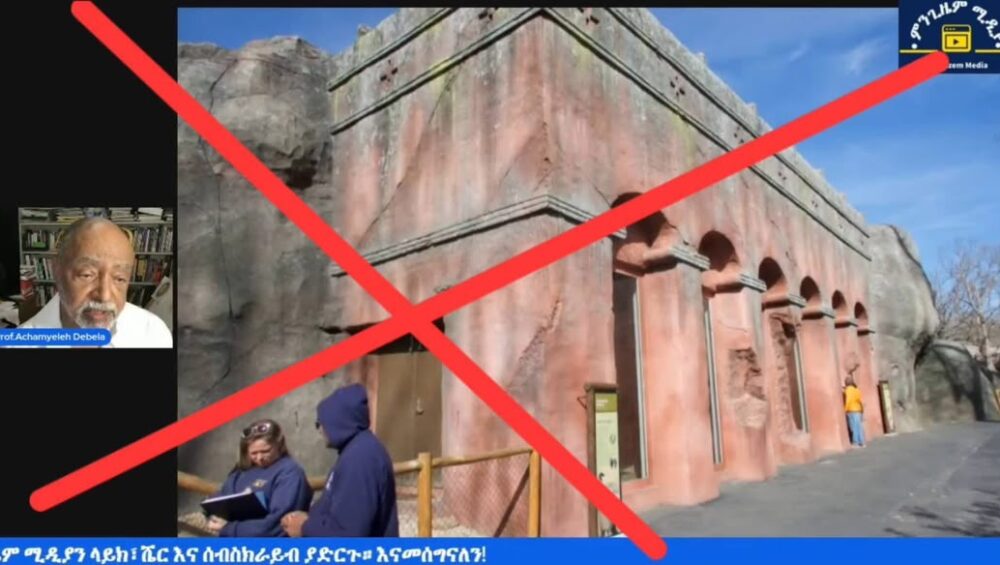
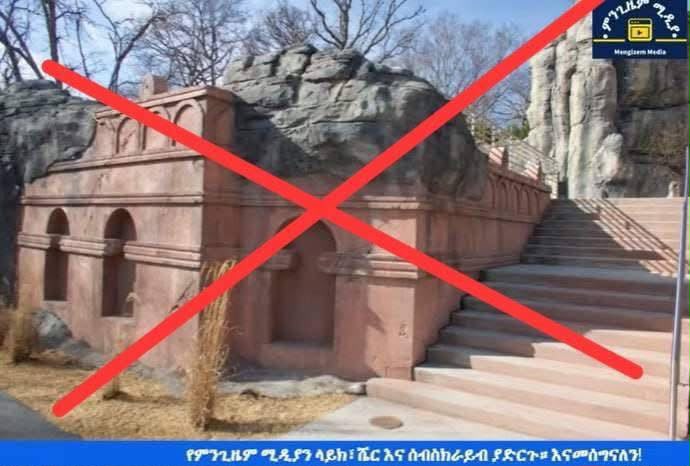
Now, a new and troubling development has emerged. In the state of North Carolina in North America, a structure modeled after the rock-hewn churches of Lalibela has reportedly been constructed within a zoo and repurposed as an animal enclosure—specifically for primates. This act reduces a sacred and historically monumental site into a setting for animals, undermining its profound spiritual significance and immense cultural value.
It is therefore essential that Ethiopians recognize the gravity of this issue and respond in an organized and appropriate manner by voicing their concerns to the responsible institutions. In this regard, I would like to acknowledge media outlets and organizations that have brought attention to this matter and helped amplify public awareness.
⸻
The Significance of the Lalibela Churches
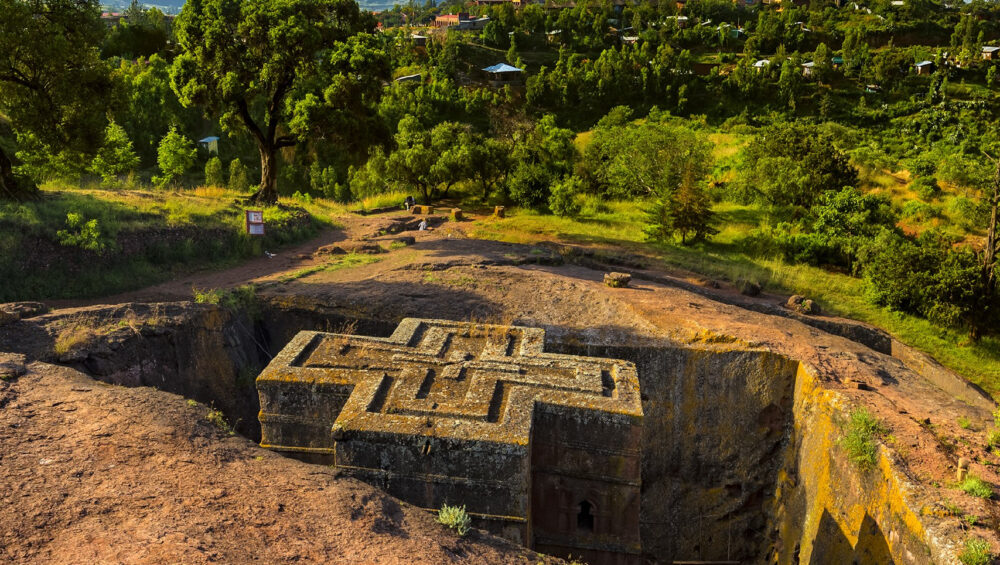
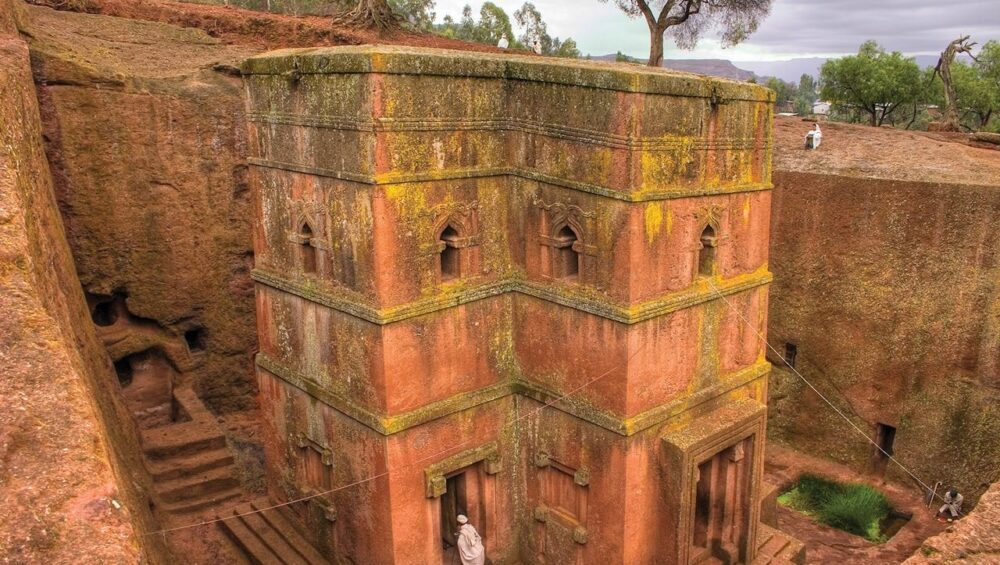
The rock-hewn churches of Lalibela are not ordinary structures. Often referred to as the “New Jerusalem,” they stand as enduring symbols of African ingenuity and spiritual depth. Carved entirely out of solid rock, these monuments are not merely architectural feats but embodiments of deep faith and pivotal landmarks in global Christian history.
Their construction in the 12th century demonstrates that Ethiopians of that era possessed advanced knowledge of geometry, mathematics, and engineering. Moreover, such monumental works imply the existence of a stable political system and a strong economic foundation during the reign of King Lalibela.
Spiritually, these churches function as “living gospels”—centers of continuous worship for over eight centuries. They represent resilience and devotion within the Ethiopian Orthodox Tewahedo Church. As one of the few sacred sites of such magnitude built in pre-colonial Africa, Lalibela stands as a powerful testament to Africa’s independent spiritual identity and advanced civilization.
Furthermore, when pilgrimages to Jerusalem became difficult due to conflict, King Lalibela established a symbolic Jerusalem within Ethiopia. This act provided a spiritual alternative for Christians and contributed significantly to global religious heritage. Today, Lalibela remains a living archive of ancient liturgy, music, and religious traditions, preserved without interruption.
Recognized as a UNESCO World Heritage Site, Lalibela is not only Ethiopia’s treasure but a shared heritage of humanity. It represents a remarkable fusion of spiritual devotion and architectural brilliance—making it far more than a historical site; it is a core element of identity.
⸻
Lalibela and America: A Historical Perspective
The churches of Lalibela were constructed in the 12th century—more than 550 years before the formation of the United States and over 300 years before Christopher Columbus reached the Americas.
Historians also note that European explorations were partly motivated by the search for the legendary Christian kingdom of Prester John, believed to be located in Ethiopia. This quest contributed indirectly to the discovery of the Americas. In this sense, Ethiopia’s historical prominence played a role in shaping global exploration.
Given this context, it is deeply troubling that a civilization with such historical significance is now represented in a manner that diminishes its value. Transforming a replica of Lalibela into an animal enclosure is not only inappropriate but also raises serious moral and cultural concerns.
⸻
A Misplaced Interpretation
Those responsible for this construction may have viewed it as an artistic or aesthetic project. Given that Lalibela’s churches are carved from rock, they may have mistakenly perceived them as resembling natural caves suitable for animals.
Additionally, institutions in North America often seek visually “exotic” designs to attract visitors. Lalibela’s unique architecture may have been appropriated for commercial appeal. However, this approach reflects a lack of cultural awareness and contextual understanding.
⸻
Implications and Consequences
The use of a Lalibela-inspired structure as an animal enclosure carries significant negative implications. For millions of believers who regard Lalibela as a sacred space akin to a “Second Jerusalem,” this act undermines its sanctity.
It also reinforces harmful stereotypes that associate Africa primarily with wildlife rather than civilization and intellectual achievement. By presenting Lalibela in this context, viewers are more likely to associate it with animals rather than its true historical and spiritual significance.
This misrepresentation risks reducing a masterpiece of human engineering to a mere “cave-like” structure. For those unfamiliar with Ethiopian history, it creates a distorted understanding of Lalibela as a primitive or utilitarian space rather than a sacred architectural achievement.
Moreover, using a community’s sacred symbol for entertainment purposes erodes mutual cultural respect. From an intellectual property perspective, Lalibela’s architectural design represents the creative and historical legacy of a people. Its unauthorized commercial use raises important ethical and legal questions regarding cultural ownership and heritage protection.
⸻
Turning Challenge into Opportunity
Despite its troubling nature, this situation can be transformed into an opportunity to promote Ethiopia’s true historical narrative on a global stage.
If the structure was created out of ignorance, Ethiopian communities—particularly those in North Carolina—can engage constructively with the institution. They can advocate for the structure to be repurposed as a cultural and educational center representing Ethiopian heritage rather than an animal enclosure.
Launching an international media campaign is also crucial. By drawing attention from major outlets such as CNN and BBC, the issue can be reframed to highlight Lalibela’s true significance as an ancient and sophisticated civilization.
Digital diplomacy can further ensure that accurate information about Lalibela is widely accessible online, countering misinformation. Additionally, this moment can be leveraged to promote tourism by encouraging global audiences to visit the authentic site in Ethiopia.
⸻
What Is Expected?
Addressing this issue requires coordinated action at multiple levels:
• Religious institutions should issue formal statements condemning the misuse of Lalibela’s image.
• Ethiopian diaspora communities should engage with local authorities and advocate for change.
• Cultural and heritage organizations should provide accurate historical information globally.
• Diplomatic channels should raise the issue with relevant authorities and international organizations.
⸻
Conclusion
As the saying goes, silence can be dangerous. Ignoring such misrepresentations today may lead to more severe distortions of history in the future.
Allowing sacred heritage to be trivialized sets a precedent that others may follow. Silence enables false narratives to flourish and weakens the defense of cultural identity.
Therefore, it is the responsibility of this generation to respond collectively and decisively. By doing so, we not only protect our heritage but also ensure that future generations inherit an accurate and dignified account of their history.
In the holy town of Lalibela, heritage is not simply a matter of history—it is a living expression of faith, identity, and spiritual continuity. The manuscripts preserved within the churches are not ordinary texts. They are sacred vessels of divine knowledge, entrusted for generations to the care of devoted deacons and priests, and deeply woven into the spiritual life of the Ethiopian Orthodox tradition.
Today, with the advancement of modern technology and the involvement of international preservation initiatives, including the Sustainable Lalibela Project, efforts are being made to digitally archive these invaluable manuscripts. While this initiative carries undeniable benefits, it also raises profound questions that must be carefully considered.
The Promise of Digital Preservation
Digital archiving offers important protections. It safeguards fragile manuscripts from risks such as aging, environmental damage, theft, or loss during times of instability. It allows knowledge to endure beyond the physical limitations of parchment and ink. It also provides opportunities for training Ethiopian professionals, strengthening long-term capacity in heritage conservation, and increasing global awareness of the richness of Ethiopia’s spiritual and cultural legacy.
These are meaningful and necessary contributions. Preserving knowledge is, without doubt, a responsibility we all share.
The Spiritual Risk We Must Not Ignore
However, we must recognize a fundamental truth:
these manuscripts are not merely sources of information—they are sacred.
Their value does not lie only in the words written on them, but in:
•The holy spaces in which they are kept
•The rituals through which they are used
•The spiritual discipline required to understand them
Traditionally, access to these texts has been entrusted to designated clergy—individuals prepared both intellectually and spiritually to engage with their meaning. This is not a limitation, but a form of protection.
When sacred manuscripts are digitized and made widely accessible online, several risks emerge:
• Loss of sacred context: Removed from their holy environment, the manuscripts risk being viewed as ordinary objects rather than sacred elements of worship.
• Erosion of spiritual authority: Open access may bypass the role of the Church and its custodians, allowing interpretation without guidance or responsibility.
• Misuse and misinterpretation: Without context, these texts may be misunderstood, misrepresented, or used in ways that contradict their intended purpose.
• Diminishing spiritual value: A digital copy can preserve information, but it cannot carry the spiritual presence and sanctity of the original.
In this way, digitization, if not carefully managed, can unintentionally lead to the de-sacralization of sacred heritage.
The Real Question: Control, Not Technology
It is important to emphasize that the issue is not technology itself. Digital tools can serve as powerful allies in preservation. The real concern lies in how these tools are used, and who governs their use.
If digitization is conducted without the full leadership and consent of the Church, and without clear cultural and spiritual boundaries, it risks undermining the very heritage it seeks to protect.
A Balanced and Respectful Way Forward
To ensure that both preservation and spiritual integrity are maintained, a balanced approach is essential:
1. Respect for Sacred Boundaries
Not all manuscripts should be digitized or made publicly accessible. Some must remain exclusively within the Church, as part of its living tradition.
2. Controlled and Tiered Access
Digital archives should not be entirely open. Access can be structured:
. Restricted materials for clergy only
. Limited access for approved researchers
. Carefully selected content for public education
3. Church Leadership at the Center
The Ethiopian Orthodox Church must play a leading role in deciding:
• What is digitized
• What is shared
• How it is interpreted
4. Contextual Presentation
Any publicly shared material must be accompanied by proper explanation, ensuring that viewers understand its sacred nature and significance.
A Call for Thoughtful Stewardship
As we look toward the future, we must remember that heritage is not only about preserving objects—it is about preserving meaning, identity, and spiritual continuity.
The manuscripts of Lalibela were never intended to become mere digital content. They are part of a sacred relationship between faith, place, and community.
Therefore, the goal should not be simply to digitize and distribute, but to:
preserve wisely, share respectfully, and protect the sacred essence of what has been entrusted to us.
Conclusion
The digital archiving of Lalibela’s manuscripts stands at a delicate intersection between preservation and spirituality. If approached with care, humility, and respect for tradition, it can serve future generations without compromising the past. But if approached without sensitivity to its sacred dimension, it risks weakening the very soul of the heritage it aims to protect.
The responsibility lies with all of us—community members, religious leaders, institutions, and partners—to ensure that in preserving our heritage, we do not lose its meaning.
Ethiopia, a land of ancient history, vibrant cultures, and breathtaking landscapes, offers an array of unforgettable destinations. Gutena Tours invites you to discover the top places that make Ethiopia a unique and fascinating country to explore. Read More“Must-Visit Destinations in Ethiopia”
Nestled in the southwestern part of Ethiopia lies a region renowned for its cultural diversity and traditional way of life—the Omo Valley. Home to several distinct tribes, each with their own customs, languages, and unique practices, visiting the Omo Valley is like stepping into a living museum of human heritage. Let’s delve into the fascinating world of these tribes, exploring their rich traditions and the allure they hold for travelers seeking authentic cultural experiences. Read More“Tribes of Omo Valley, Ethiopia”
Ethiopia, a land of stunning landscapes and rich cultural heritage, is also celebrated as the birthplace of coffee. Coffee tourism in Ethiopia offers an immersive experience into the origins of this beloved beverage, allowing travelers to trace its journey from the lush highlands to the global stage. In this blog, we delve into the enchanting world of Ethiopian coffee tourism, highlighting must-visit regions, cultural experiences, and the unique stories that make Ethiopia a premier destination for coffee enthusiasts. Read More“Exploring Coffee Tourism in Ethiopia”
Experience the rich cultural heritage and breathtaking landscapes of Ethiopia with Gutena Tours. Our expertly curated itineraries offer a unique blend of adventure and exploration, taking you through ancient historical sites,